Laser Marking Silicone with Fiber Lasers
Industry: Consumer Goods - Kitchen Knife
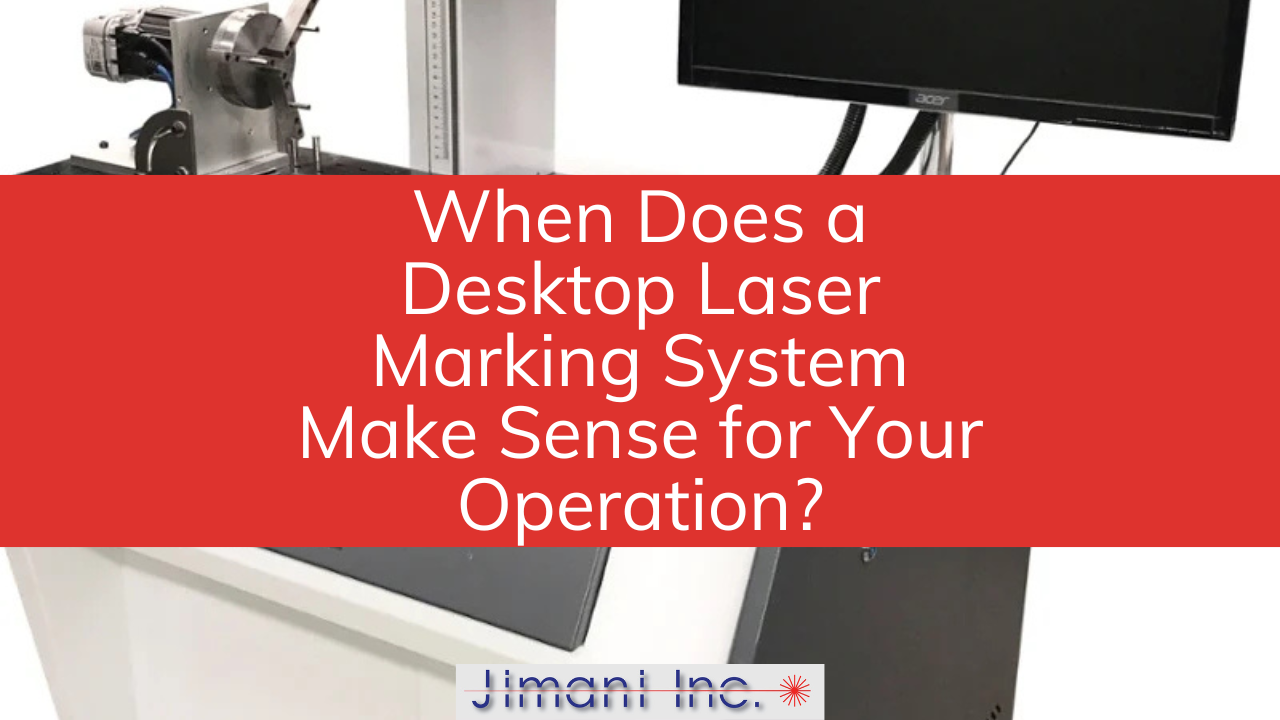
Manufacturing professionals considering permanent part marking face a critical decision: finding a marking solution that balances production needs with floor space, budget, and operational simplicity. Desktop laser marking systems have emerged as a practical answer for facilities marking smaller components, prototypes, or moderate production volumes without dedicating extensive floor space to marking equipment.
Desktop laser markers excel in environments where operators manually load parts for marking. These compact systems handle the same permanent marking tasks as larger industrial markers but fit comfortably on a standard workbench or production table.
Manufacturing engineers typically choose desktop systems when marking tooling components, identification tags, nameplates, medical instruments, aerospace fasteners, and electronic components. The manual loading design works particularly well for job shops handling diverse part types, prototype facilities needing quick changeovers, and quality control departments marking test samples.
The Desktop Hybrid specifically accommodates parts up to 19 inches tall with its generous Z-axis travel, unusual capability for a compact system. This vertical clearance means you can mark taller assemblies and fixtures that typically require larger, more expensive marking stations.
Desktop fiber laser markers create permanent marks on virtually any metal surface your facility processes. Steel, aluminum, and brass represent the most common applications, delivering clear, high-contrast marks that withstand handling, weather, and chemical exposure.
The same fiber laser technology marks titanium components for aerospace applications, copper parts for electrical systems, and even challenging substrates like hardened tool steel. Beyond metals, these systems mark many engineering plastics, rubber compounds, graphite components, and composite materials increasingly common in modern manufacturing.
Your specific material might require different laser parameters for optimal results. Anodized aluminum marks differently than raw aluminum. Stainless steel can produce either dark marks or bright white marks depending on settings. Rather than guessing whether your substrate will mark properly, send us a sample. We'll test mark it at no charge and return it with recommended settings, proving the system works before you invest.
Modern manufacturing demands more than simple text marking. Desktop laser systems handle the full range of industrial marking needs through sophisticated software control and precise beam steering.
Text marking includes fixed information like part numbers and model designations, plus variable data like date codes and batch numbers. The system switches between fonts instantly, marks in any orientation, and scales text from microscopic circuit board markings to large nameplate lettering.
Graphics capabilities extend from simple company logos to complex technical drawings. The laser reproduces fine details impossible with traditional marking methods, creating photo-quality images when needed for branding or instruction panels.
Serial number generation happens automatically through the marking software. Set your starting number, increment pattern, and the system advances through sequences without operator intervention. This automation eliminates transcription errors common with manual serialization methods.
Machine-readable codes have become essential for traceability. Desktop markers create linear barcodes, 2D Data Matrix codes, QR codes, and specialized formats required by automotive, aerospace, and medical device standards. The high resolution ensures reliable scanning even on challenging surfaces.
Space efficiency drives many desktop system decisions. The Desktop Hybrid laser systm occupies roughly the footprint of a standard desk, fitting into existing work cells without facility modifications. This compact design doesn't compromise capability - the system delivers the same marking quality as machines requiring dedicated floor space.
Maintenance simplicity sets fiber laser systems apart from older marking technologies. The Desktop Hybrid contains no user-serviceable parts, eliminating the lamp replacements, mirror alignments, and cooling system maintenance that plague traditional YAG lasers. The fiber laser source runs for 100,000+ hours without degradation, typically outlasting the equipment it marks.
Operating costs stay minimal after initial purchase. No consumables means no ongoing purchases of marking compounds, labels, or replacement parts. The system draws about the same power as a desktop computer, adding negligible electrical costs compared to older laser technologies requiring water chillers and high-voltage power supplies.
Setup flexibility allows quick changeovers between different part types. Save unlimited marking files in the software, recall them instantly, and switch between jobs in seconds. This responsiveness suits contract manufacturers and job shops handling diverse customer requirements.
Purchasing marking equipment without strong support creates unnecessary risk for your operation. Jimani combines 40+ years of laser marking experience with a unique perspective - we operate our own job shop using the same equipment we sell. This daily experience means we've encountered and solved virtually every marking challenge you might face.
Initial training happens at our facility or yours, covering safe operation, software navigation, and optimization techniques for your specific parts. Most operators become proficient within a day, though we remain available for questions as you encounter new marking challenges.
Technical support comes from engineers who use these systems daily, not call center staff reading scripts. When you need help optimizing mark quality on a new material or solving a production challenge, you're talking to professionals who've likely faced the same situation in our job shop.
Software support includes both the Leopardmark software included with every system and optional upgrade to Prolase professional software. Both packages receive ongoing updates and improvements based on user feedback and evolving industry requirements.
Before investing in any marking system, confirm it handles your specific applications properly. Send us sample parts for test marking - we'll mark them according to your specifications and return them for evaluation. This proof-of-concept costs nothing and eliminates uncertainty about mark quality, cycle time, and substrate compatibility.
Quote requests should include your typical marking requirements, production volumes, and any specific industry standards you must meet. We'll recommend the appropriate laser power, lens configuration, and accessories based on your actual needs rather than selling you capabilities you won't use.
Sample testing typically completes within 48 hours of receiving your parts. We'll include recommended laser settings, cycle time estimates, and photographs of the marked samples before shipping them back. If the marks don't meet your requirements, we'll suggest alternative approaches or honestly tell you if a different technology better suits your application.
Desktop laser marking systems offer manufacturers a practical path to permanent part marking without the space requirements and complexity of larger industrial systems. The combination of compact design, minimal maintenance, and professional support makes these systems particularly attractive for facilities new to laser marking technology.
Send us your parts for free sample marking and see the actual results on your materials. Contact our team at (805) 486-1399 or submit your sample request online. Include any specific marking requirements, industry standards, or quality specifications your parts must meet. We'll prove the technology works for your application before you commit to any purchase.
Request your free sample marking today and receive marked parts back within 48 hours, complete with cycle time data and recommended settings for your production environment.