Laser Engraved Signature: Arizona Precision
A fiber laser can engrave a signature beautifully. The hard part is almost never the laser — it is turning a handwritten note into a file the laser can actually follow. Arizona Precision, a marking job shop run by John and Helen Raycraft, hit exactly that wall on a rush order: a handwritten message and signature on dark paper, a customer waiting, and no clean way to get it into an engravable graphic. They called Jimani, and within an hour the artwork was done. Here is why artwork prep is the real bottleneck in custom engraving, how a handwritten note becomes engravable line art, and what kind of help a job shop should be able to count on when the clock is running.
Can a handwritten signature be laser engraved?
Quick Answer
Yes. A fiber laser can engrave a handwritten signature or message faithfully, but only after the handwriting is converted into a graphic file the marking software can follow. The laser does not read paper — it traces vector lines or a cleaned-up image, so the artwork has to exist as a file first.
Signatures, handwritten notes, and other one-off graphics are a common request in custom engraving — commemorative plaques, awards, presentation pieces. The mark itself is well within what a fiber laser does every day. What stands between the handwriting and the finished piece is the file. A laser marker follows whatever it is given, and a piece of paper is not a file.
This is the part customers tend to underestimate. The engraving might take a couple of minutes once the artwork is ready. Getting a faithful, engravable version of someone's handwriting can take longer than the marking itself, and on a rush order that gap is where the job stalls.
How do you turn a handwritten note into a file a laser can engrave?
Quick Answer
You scan the original, then a graphics artist cleans it up and converts it into vector line art the marking software can follow. The scan captures the handwriting; the vector conversion rebuilds those strokes as crisp, continuous lines the laser traces cleanly at production speed.
When John called, the first thing we asked for was a scanned copy emailed over, so we could see what we were dealing with. From that scan, our graphics artist rebuilt the handwriting as clean line art within an hour. The before and after tell the story better than a description does:
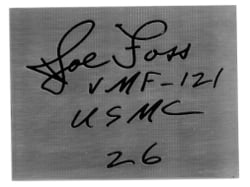
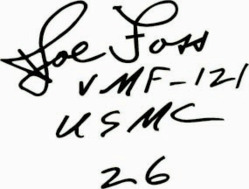
Why vector rather than just engraving the scan directly? A laser marker draws lines, and clean vector outlines give a signature smooth, unbroken strokes at any size. A raw scan engraved as a bitmap tends to come out coarse and slow, because the laser is filling pixels instead of following the natural path of the pen. As Jimani's own marking material puts it, essentially anything that can be reduced to a clean graphic file can be marked — the work is getting it into that form.
Why does handwriting on dark paper make conversion harder?
Quick Answer
Handwriting on dark paper is harder to convert because there is little contrast between the ink and the background, so an automatic scan-to-vector trace cannot reliably separate the strokes from the page. It takes a person to read the marks and rebuild them as clean line art.
Automatic tracing tools lean on contrast. Dark ink on white paper traces cleanly; the software sees an obvious edge between mark and background. Drop that same handwriting onto dark paper and the edges blur — the trace either drops strokes or fills in noise, and you spend more time fixing the result than you would have rebuilding it by hand.
That is exactly the bind Arizona Precision was in. The information was handwritten on dark paper, they could not find a way to turn it into a usable graphic file, and the order was a hot rush. A skilled graphics artist solves it the way an automatic tool cannot — by interpreting what the writer intended and drawing it back as clean, deliberate line work.
What graphics support should a laser system owner expect?
Quick Answer
Artwork help should be part of the relationship, not a separate transaction. Jimani provides graphics and file-conversion support as a courtesy to its customers, including job shops and owners of its fiber laser systems, because the file is often the difference between a job that runs and a job that stalls.
Arizona Precision is a marking job shop in its own right, and the Raycrafts had bought a Hybrid fiber laser marking system from Jimani about three years before this job came up. In other words, they are both a customer and, in their market, a competitor — and the answer was still yes, send it over, we will turn it around. We did the artwork as a courtesy, the same way we do for any customer who hits a wall on a file.
We jokingly told John he owed our graphics artist a beer. His reply:
"Thanks again. You have the greatest customer service in the world!"
John Raycraft — Arizona Precision
The point is not the compliment. It is that a marking partner worth having does not treat the artwork as someone else's problem. A laser is only as good as the file you feed it, and helping get that file right is part of the job.
Where do you turn when a rush engraving job hits an artwork problem?
Quick Answer
When a rush engraving job stalls on artwork, the fastest path is a shop that can both prepare the file and mark the part. Sending the original — even a rough scan or phone photo — lets the graphics work and the marking happen in one place instead of bouncing between a designer and a marker.
Most engraving delays are not laser problems. They are file problems — a logo in the wrong format, a signature on paper, a sketch that needs to become clean line art before anything can be marked. Catching that early, with someone who can fix it and mark it under one roof, is what keeps a rush order on schedule.
If you have a custom engraving job and the artwork is the thing standing in your way, send us what you have. We will tell you straight whether it is engravable as-is, what it needs to get there, and how fast we can mark it in our job shop. You can see the range of work we have marked in the photo gallery if you want a sense of what is possible first.
Interested in owning your own system

Interested in having us mark your product