
Skip to content

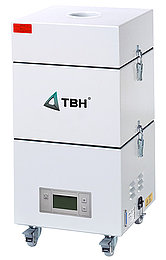
LN-230 Fume Extractor for Laser Marking

Hero Banner

The devices in the LN 200 series feature a compact, modular design which allows simple adjustment of the filter configuration for individual applications. Thanks to the special high-power turbine, the units can be arranged in decentralised positions and extract reliably even over long distances.

The contaminated air is drawn in by the collection unit (extractor hood, suction arm, hose, etc.) and transported into the filter unit directly. In the filter unit, the contaminant particles are filtered into different filter levels according to their size.

Request a Quote

All LN series units are equipped with an activated carbon/BAC filter element to remove the majority of gaseous contaminants. Afterwards, the purified air can either be circulated back into the work area or diverted outdoors through an exhaust duct. Recirculating the air in the work area is a way to easily reduce energy costs.

Click here to view the product specification sheet.
laser-fume-extractor-230.jpg

Fume Extractors on our Blog

graphics software FAQ Tiling Fiber Laser Marking Hybrid Laser System rotary part indexer

Large Field Marking with Steered Beam Laser Marking Systems

   Published On 15 September 2026
You have a control panel that is 19 inches wide and a galvo fiber laser with an 8 inch square marking field. The part does not fit. The answer is laser tiling: the artwork gets ...
software FAQ Fiber Laser Marking Hybrid Laser System

How to Troubleshoot a Fiber Laser Marking System

   Published On 8 September 2026
Yesterday the laser was dropping clean, crisp serial numbers on every part. This morning the same job comes out faint, inconsistent, or not at all. Nothing changed in the program, ...
FAQ Job Shop aluminum ablation industrial barcode Fiber Laser Marking laser marking

How Do You Laser Mark Hard Anodized Aluminum?

   Published On 1 September 2026
You've got a run of hard anodized parts on the dock and a customer who wants serial numbers on every one of them. The settings that worked fine on your Type II anodized parts ...