Laser Marking Clear Acrylic Award
Industry: Promotional, Ad Specialties
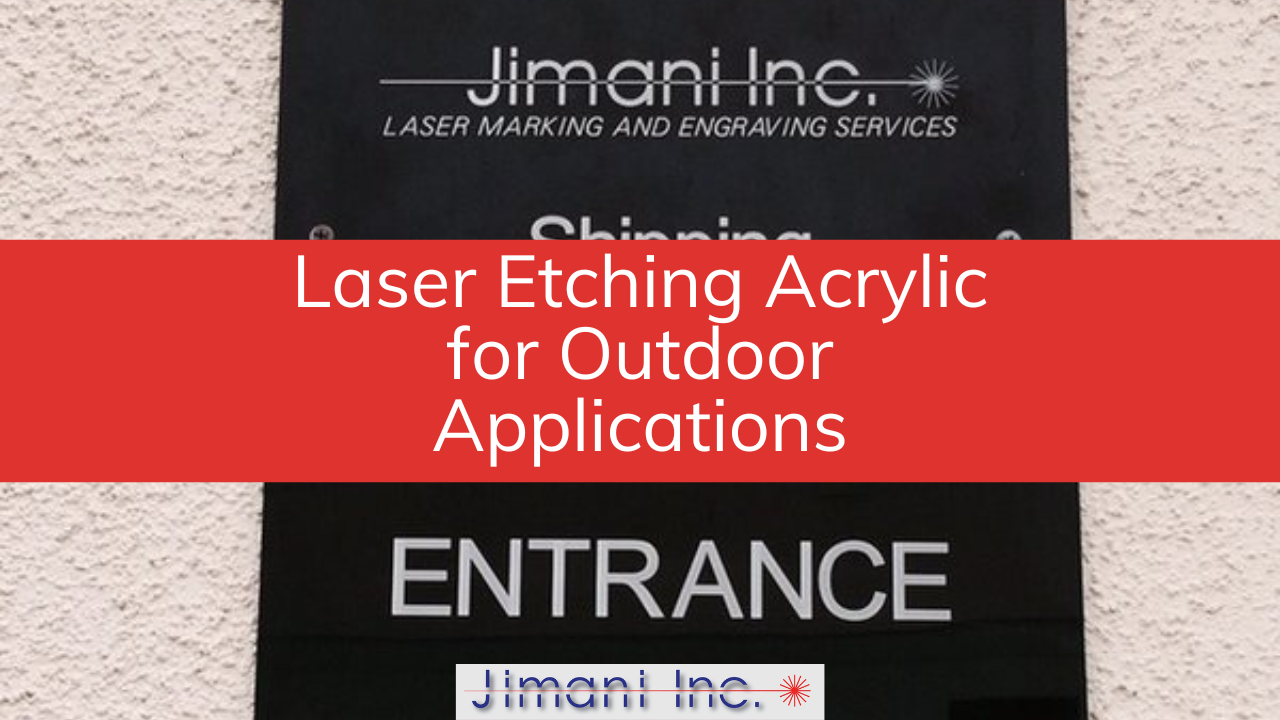
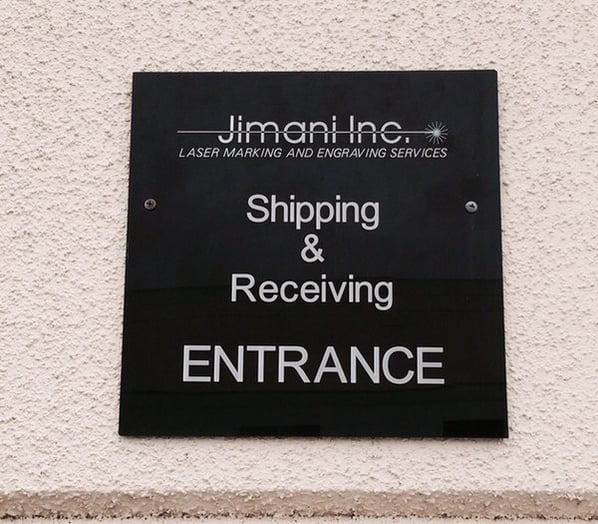
When customers ask us how durable laser-etched acrylic really is, we used to point to manufacturer specs and industry data. Now we just walk them outside and show them our building sign.
This cast acrylic sign has been mounted on the exterior of Jimani's facility for over a decade. Ten years of California sun, coastal moisture, temperature swings from summer heat to winter chill, and the occasional Santa Ana wind-driven dust storm. The mark looks nearly identical to the day we made it.
The durability comes down to how the mark is actually created. Unlike printing or painting, which applies material on top of a surface, laser etching physically changes the acrylic itself. The process creates what's called surface foaming - the laser heats the cast acrylic just enough to create microscopic bubbles in the material that scatter light and produce that crisp white appearance.
There's nothing to peel, fade, or wash away because the mark isn't sitting on the surface. It's part of the material. UV exposure that would destroy a vinyl decal or fade printed graphics within a few years has minimal effect on a properly executed laser etch. The foamed structure remains stable because the acrylic surrounding it provides protection.
This particular sign was created before fiber lasers became the industry standard - we originally made it with a YAG laser. Today, our Hybrid fiber laser systems produce even more consistent results with finer control over the foaming process. The fundamental physics remain the same, but the precision and repeatability have improved significantly.
Not all acrylic performs equally for this application. Cast acrylic consistently delivers the best results for outdoor signage and displays. The manufacturing process for cast acrylic creates a more homogeneous material structure compared to extruded acrylic, which means more uniform foaming during laser processing and better long-term stability.
Cast acrylic also has superior weathering characteristics independent of the laser marking. It resists yellowing from UV exposure better than extruded alternatives and maintains its optical clarity longer. When you combine that inherent durability with a laser mark that becomes part of the material, you get the kind of longevity we've documented on our own building.
For customers who need outdoor-rated marked acrylic components, we recommend discussing your specific application during the quoting process. Material thickness, expected environmental exposure, and mark complexity all factor into achieving optimal results.
The outdoor signage on our building represents just one use case. Job shop customers bring us cast acrylic parts for a range of applications where permanent, weather-resistant marking matters.
Building identification signs and wayfinding displays see consistent demand, particularly for commercial properties where replacing faded signage creates ongoing maintenance costs. A single laser-etched acrylic sign that lasts a decade or more represents significant savings compared to vinyl or printed alternatives that need replacement every few years.
Equipment panels and control interfaces for outdoor machinery benefit from the same durability. Agricultural equipment, outdoor HVAC systems, and marine applications all expose identification plates to harsh conditions. Laser-etched acrylic provides readable information that survives where adhesive labels and screen-printed marks fail.
Architectural elements present another growing category. Designers increasingly specify laser-etched acrylic for exterior installations where the clean aesthetic of acrylic needs to be combined with text or graphics that won't degrade. Address plaques, donor recognition displays, and memorial markers all fit this profile.
Screen printing on acrylic remains common for high-volume applications where cost per unit drives decisions. The ink sits on the surface and bonds through chemical adhesion. For indoor applications with minimal handling, screen printing works adequately. Outdoor exposure tells a different story - UV degradation of the ink, thermal expansion mismatches between ink and substrate, and moisture intrusion at the ink-acrylic interface all contribute to premature failure.
Vinyl application offers easy customization and low setup costs, making it attractive for short-term signage. The adhesive bond, however, represents a single point of failure. Heat softens it. Cold makes it brittle. UV breaks down both the vinyl and the adhesive over time. Five years of outdoor exposure typically renders vinyl graphics unreadable or detached entirely.
Engraving cuts into the acrylic surface, creating marks through material removal rather than surface modification. Deep engraving can trap dirt and moisture, potentially obscuring the mark over time. The engraved channel also creates stress concentrations that can propagate cracks under thermal cycling. Surface foaming avoids these issues by modifying rather than removing material.
Paint filling engraved marks attempts to combine engraving depth with color. The paint faces the same UV and weathering challenges as any surface coating, often failing faster than the surrounding acrylic. You end up with visible engraving and missing paint - arguably worse than either method alone.
Material selection matters more than most customers initially realize. Cast acrylic costs more than extruded, but the performance difference for outdoor applications justifies the investment. We can mark either type, but we'll recommend cast acrylic for any application with significant environmental exposure.
Design complexity affects processing time and cost. Simple text and logos mark quickly. Intricate graphics with fine detail require slower processing speeds to achieve clean foaming without over-heating adjacent areas. Halftone images and photographs can be reproduced, though the surface foaming technique works best with high-contrast designs.
Mark placement relative to mounting hardware deserves attention during design. Mechanical fasteners create stress points in acrylic. Positioning marks away from these areas reduces the risk of crack propagation that could eventually affect the etched graphics. We can advise on optimal layouts when you send us your design files.
Quantity affects unit pricing significantly. Setup time for laser marking represents a fixed cost regardless of whether we're marking one piece or one hundred. Higher quantities spread that setup across more parts, reducing per-unit cost. For customers with ongoing needs, we can store job files and fixtures to streamline repeat orders.
Our job shop has been laser marking customer parts since 1990. The sign on our building serves as daily proof that we stand behind the durability of our work. Whether you need a single custom sign or production quantities of marked acrylic components, we can help you determine the right approach for your specific application.
Send us your design files and material specifications for a quote. If you're unsure about material selection or design optimization, our team can walk you through the options during a brief consultation. We've seen enough acrylic marking projects over the past three decades to help you avoid common pitfalls and get results that last.
Check out this article about laser etching clear acrylic awards.