Jimani’s First Experience with IPG’s new YLP V2 Fiber Laser
When I recently placed an order for a few new IPG YLP type lasers to be used in Jimani Langolier...
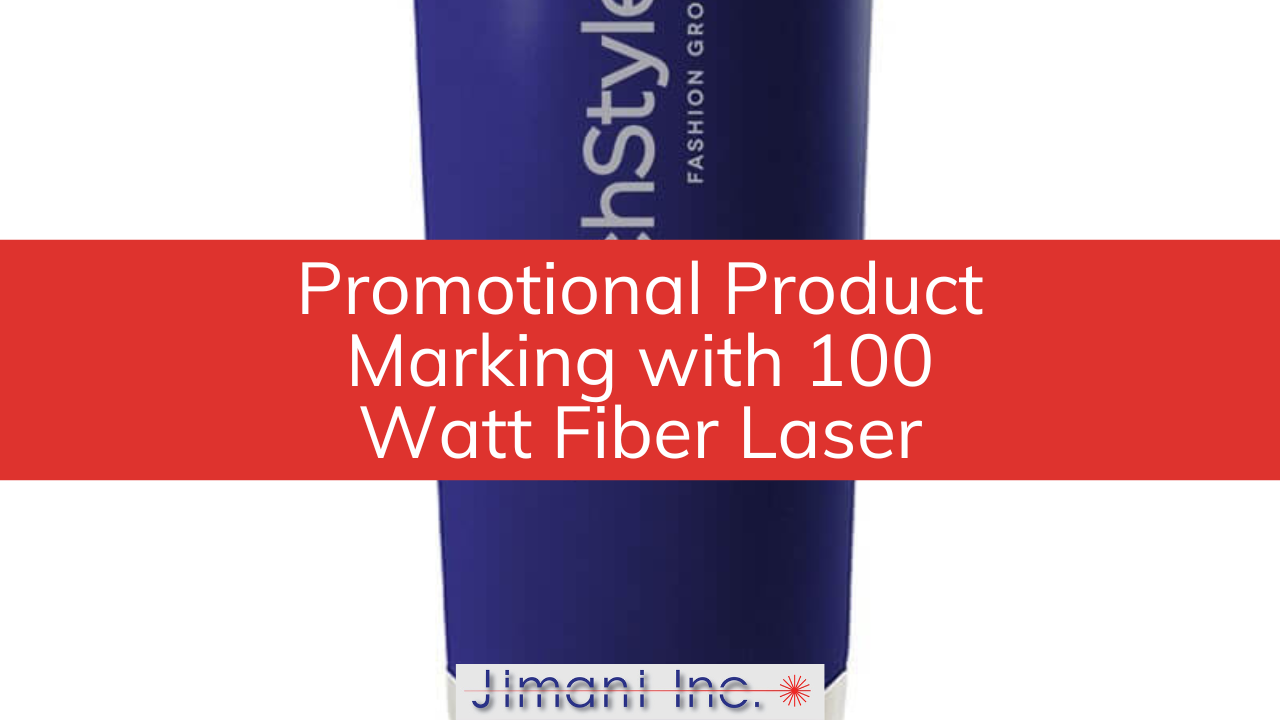
Sutter's Mill Specialties, based in Tempe, AZ, handles laser marking across a wide range of materials and volumes. Whether it's a single prototype or a run of several thousand promotional items, their shop floor stays busy. When they needed a laser marking partner who could keep up with that kind of variety, they turned to Jimani.
Mike Kochneff, Graphics Manager at Sutter's Mill Specialties, oversees an operation that most shops would find staggering. He manages 20 fiber lasers and 2 CO2 laser systems, processing thousands of orders every week. That's not a typo. Twenty fiber lasers running production in a single facility.
"We have both 100 watt fiber lasers and 50 watt fiber lasers as well as 2 CO2 systems that allow us to customize the marking for all of our promotional items," says Kochneff. "The items range from key chains to pens to coffee mugs to water bottles to just about anything you can imagine. Our materials include acrylics, wood, stainless steel, aluminum, ceramic, and lots more."
That kind of material diversity is exactly where fiber laser systems prove their value. Metals like stainless steel and aluminum respond differently than acrylics or ceramics, and each substrate requires its own approach to speed, power, and pulse frequency settings. Running that many systems on that many materials means the equipment has to be flexible, reliable, and consistent from one unit to the next.
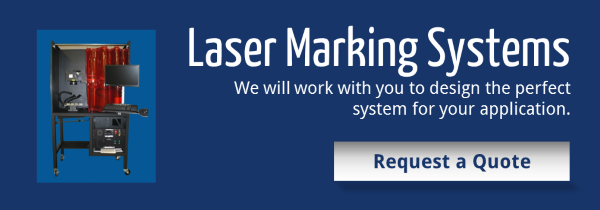
Sutter's Mill runs Jimani Hybrid Desktop Fiber Laser systems in their production facility. The open frame design turned out to be a key factor in their workflow efficiency. When you're loading key chains one minute and coffee mugs the next, the ability to quickly swap fixtures and reposition parts without fighting an enclosure door makes a measurable difference in throughput.
"The Hybrid Open Table Fiber Laser systems from Jimani mark all of these different materials and parts beautifully," Kochneff explains. "We run 24 hours a day, 5 days a week, so these are workhorse systems for us. The open table systems are flexible and allow us to have one operator run up to 3 machines at a time."
Think about what that means for labor efficiency. One operator manages three laser systems simultaneously. That's only possible when the equipment is designed for fast part loading, and the software makes job changeovers simple. In a shop running around the clock, those minutes saved on each changeover compound into hours of additional production capacity every week.
When you're running 20 fiber lasers, software consistency across every machine isn't optional. It's essential. Sutter's Mill uses Prolase laser marking software across all of their Jimani systems, which means any graphics file created for one laser works seamlessly on the others.
"The Prolase software on all of the systems makes it easy to use our graphics files on any laser," says Kochneff. "These systems are so fast and provide a high ROI that we do not need to use any other type of marking systems for our parts."
That's a telling statement from someone managing a fleet of laser systems. When a graphics manager with 20+ lasers says the equipment delivers strong enough ROI that he doesn't need to supplement with other marking methods, that speaks to both the versatility and the economics of fiber laser marking. For promotional products, where margins depend on fast turnaround and consistent quality, the marking system has to earn its keep every shift.
Equipment running 24 hours a day will eventually need attention. That's just reality. What separates a manageable situation from a production crisis often comes down to how fast your equipment vendor can help you troubleshoot and get back online. For Sutter's Mill, this is where the relationship with Jimani proved its value beyond just hardware.
"Jim and his team are the best. They are amazing with the help they give us and with Jim's expertise, he immediately knows how to talk us through any issues over the phone. If there are any issues with the equipment they get it handled quickly and even loan us parts if needed to keep the shop running. We couldn't ask for any more from our laser partner," concludes Kochneff.
Loaning parts to keep a customer's production running is the kind of support you don't find on a spec sheet. It comes from a vendor who understands what downtime actually costs a shop running three shifts. Jimani's own laser marking job shop has operated since 1990, so there's a firsthand understanding of what it means when a laser goes down in the middle of a production run.
The promotional products industry presents a unique laser marking challenge. Part geometries change constantly, from flat dog tags to curved tumblers. Materials shift from job to job. And the expectation is always clean, attractive marking that makes the end customer want to show off the product.
Fiber lasers handle metals, coated surfaces, and certain plastics with a single wavelength (1064 nm), which covers the majority of promotional product substrates. Sutter's Mill pairs those fiber systems with CO2 lasers for materials like wood, glass, and organic substrates that respond better to the 10,600 nm wavelength. That two-laser-type approach covers virtually every material a promotional products shop encounters.
The Jimani Hybrid Fiber Laser Marking Systems use JPT MOPA fiber lasers with variable pulse width capability, which gives operators more control when dialing in settings for different materials. A short pulse width works well for delicate ablation on coated surfaces, while longer pulse widths deliver the energy needed for deeper engraving into metals. That flexibility matters when your job queue includes aluminum tags at 8 AM and ceramic mugs at 10 AM.
The Jimani Hybrid Desktop Fiber Laser Marking System is built for shops that need flexibility without sacrificing production capability. The workstation's generous Z-axis travel (up to 19 inches standard) accommodates long focal length lenses, custom fixtures, and tall or oversized parts that would be a tight fit in many competing systems.
Standard configurations include JPT MOPA fiber lasers in 30, 60, 80, or 100 watt options, paired with Galvo Tech scanheads, Opex F-Theta lenses, and RTC 4 control boards. Both Leopardmark and Prolase laser marking software are available, and both are American-made with unlimited, no-charge operational support from Jimani.
Each system ships fully assembled, tested, and calibrated from Jimani's facility in Oxnard, CA. A footswitch enables hands-free operation, and the system runs on standard 115 VAC 15 amp service. No water cooling. No high-voltage connections. Options include manual X-Y tables for part positioning, rotary indexers for cylindrical marking, and fume extractors for applications that generate smoke or vapors.
Whether you're a promotional products shop like Sutter's Mill running 20 systems around the clock, or a manufacturer adding your first laser to the production floor, the Hybrid Desktop system is designed to start marking parts the day it arrives.
Contact Jimani today to discuss your laser marking requirements or request sample marking on your parts.