Ablation vs. Engraving vs. Stain Marking
Ask three shops to "engrave" a part and you may get three different processes. Fiber lasers mark...
You need a dark mark on a stainless steel part that stays dark after passivation, and you have probably already learned that an aggressive citric or nitric acid process can erase the very mark you spent cycle time creating. The short version: a fiber laser stain mark is a solid answer to that problem. The laser heats the surface to grow a dark oxide layer rather than cutting into the metal, and that oxide can be built thick enough to survive a properly controlled passivation. The honest catch is that any stain mark, from any laser, can be stripped if the passivation is aggressive enough. This article covers what kind of mark survives, how citric and nitric processes treat it differently, why fiber is the right tool, and the technique we use in our job shop to keep marks dark through passivation.
Quick Answer
Yes. A fiber laser stain mark can survive citric or nitric passivation on stainless steel when the oxide layer is thick enough and the passivation process is controlled. The laser grows a dark oxide layer rather than cutting into the metal, so aggressive passivation can still lighten or remove it. The safest path is to mark production-material samples, run them through the actual passivation process, and tune the laser parameters before production.
Stain marking is a different process from ablation or engraving. Ablation removes a thin surface layer and leaves a white, frosted mark, while engraving vaporizes material to a measurable depth. A stain mark removes nothing. The heat from the beam grows an oxide layer only microns into the surface, which is why it is non-penetrating and why no inks, paints, or chemicals are involved. That combination is the reason stain marking shows up so often on surgical instruments and other parts where surface integrity matters.
Fiber lasers carry a pulse width in the range of 100 to 120 nanoseconds, and that range lets them form the oxide at reasonable marking speeds rather than crawling across the part. Multiple passes drive the oxide darker, and on the right grade of stainless you can push it from gray toward a deep brown or black.
Most of the metal medical parts that come through the Jimani job shop are stainless or titanium, and stain marking is the technique we reach for first on them. If you want the settings-level walk-through, our guide on how to laser mark stainless steel breaks down spot size, speed, and pass count.
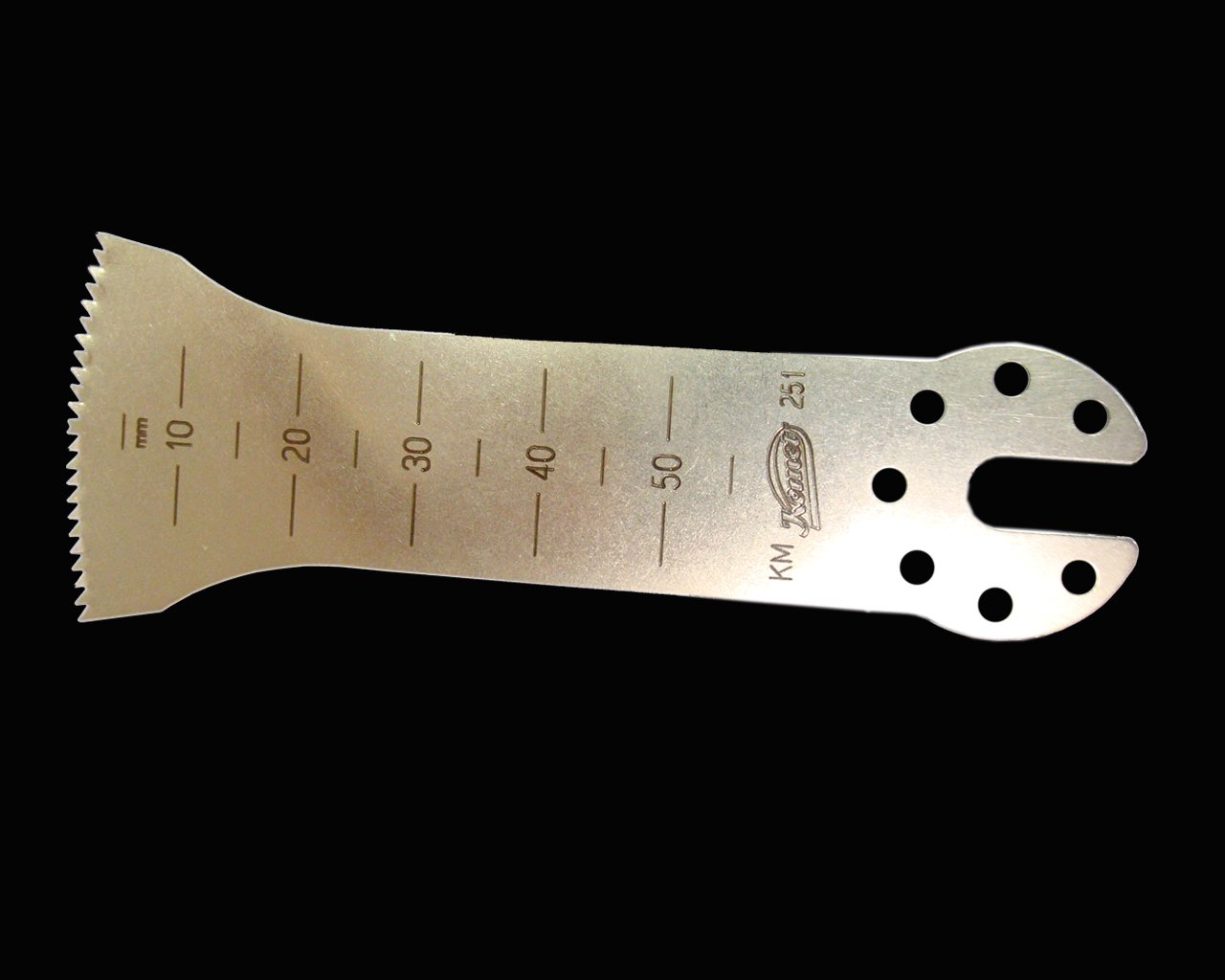
Here is the part most spec sheets skip. The oxide layer that gives you the mark is the same kind of oxide that passivation chemistry acts on. An aggressive nitric acid process can remove that layer outright or lighten it to the point where contrast falls below what an inspector or a vision system can read. Less aggressive citric acid passivation has been gaining ground in the medical device business, and in our experience it tends to be kinder to a stain mark, though results still vary by formulation.
Every device manufacturer seems to have developed its own passivation recipe, which is why a mark that survives one shop's process can fail another's. There is a second trap worth naming. Forcing a darker mark by dumping too much heat into the surface in too little time can set up long-term corrosion at the boundaries of the marked areas, the opposite of what passivation is supposed to protect against. A good stain mark balances darkness against that corrosion risk rather than chasing the blackest possible result.
We worked through this exact tension on parts headed for sterilization, and the detail lives in our piece on laser marking medical devices and instruments.
1064 nm light is what the world uses to mark metals. YAG, Vanadate, and fiber lasers all produce that wavelength, but the field has narrowed. YAG lasers have largely fallen out of marking work, and Vanadate sources still carry many of the same drawbacks. Fiber dominates metal marking sales today for practical reasons: efficiency, reliability, a small footprint, and a design with no consumables and no laser maintenance.
The reader who sent this question mentioned that some short-pulse machines accomplish dark marks on stainless. They can, and for a narrow set of materials a shorter pulse helps. For the vast majority of stainless stain-marking work, though, the fixed 100 to 120 ns pulse width of a standard fiber laser does the job at a fraction of the cost of a specialty short-pulse source. If you want a wider color range beyond gray, brown, and black, that is where a variable pulse width MOPA laser earns its keep, a topic we cover in color marking with fiber lasers.
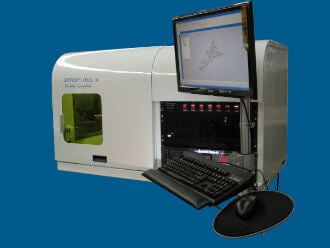
Jimani builds fiber laser systems that mark stainless steel medical parts intended to pass passivation specifications, and we run those same systems in our own job shop every day.
The technique that has worked for us is spot passivation. Rather than letting the full part bath act on the mark, a small amount of citric acid solution is applied over the marked area for a few seconds and wiped off, which can passivate the marked region while preserving contrast. It is not magic, and it does not override an aggressive full-immersion process, but it is a useful tool when the mark and the passivation are fighting each other.
The grade of stainless matters too. Different grades grow different oxides under the same settings, so a recipe dialed in on 316L will not transfer cleanly to 17-4. The reliable path is to mark on the actual production material and run it through the actual passivation process before you commit to a parameter set. A mark that disappears in QA defeats the entire point of marking it.
No vendor can promise that a stain mark will survive your passivation sight unseen, and anyone who does is guessing. The variables, your stainless grade, your acid chemistry, your concentration and dwell time, and your required contrast, are specific to your line. The way to remove the guesswork is to put a real mark in front of your real process.
That is exactly why we ask for parts. Send us a sample of your stainless component and we will stain mark it so you can run it through your own passivation and judge the contrast for yourself. If you are weighing whether to bring marking in house, we are happy to help you run the numbers on a system versus job shop work through our laser marking and engraving services. Either way, the question gets answered with a marked part in your hand, not a spec sheet claim.